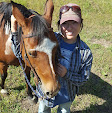
Today is the day that marks the union of Jedediah & Jenni H. of Wyoming, in Holy Matrimony.
Jed is my cousin. So a big congrats to the newly married couple.
"So they are no longer two, but one. Therefore what God has joined together, let man not separate." Matthew 19:6 NIV
Okay let's get down to business. During the next two weeks I will be visiting relatives,(the obvious reason is above), and thus will have sporadic Internet access. You can be sure that I will post as often as I have Internet access, but I didn't want you to think that I got eaten by a rabid polar bear or something, so I'm alerting you to this development. Please feel free to comment and I will get back to you as soon as I can.
P.S. If you don't hear from me in about 6 months, I probably got eaten by a mountain lion! LOL!
7.01.2011


The Inconvenient Marriage of Charlotte Beck by Kathleen Y'Barbo ~ review

"Sometimes romance is just an inconvenient marriage away!" - From the back cover of The Inconvenient Marriage of Charlotte Beck.
While visiting Europe Charlotte Beck meets the Viscount Alex Hambly, and falls - literally - into his arms. Charlotte wants to pursue a career in her father's business, while Alex has a passion for astronomy. Charlotte's father meets Alex and immediately takes a liking to him.
Pressured by her father, Charlotte and Alex enter into an inconvenient marriage. Sparks fly and a battle of wills rages. Can love really be just an Inconvenient Marriage away?
My Review: This book had me hook, line, and sinker from page one! The characters were charming and lovable, despite their faults. Ms. Y'Barbo's voice was perfect for this book, and the pace moved right along. It isn't often that a book draws me in so completely. I loved how the sparks flew (sometimes literally) between Alex and Charlotte, not to mention the humor that had me chortling constantly. I could go on and on about how the chemistry between Alex and Charlotte entertained me, but for the sake of keeping your attention, I won't.
The characters were well done and believable. Charlotte and Alex weren't perfect but they both had their charms. Charlotte was spoiled, but somehow I ended up loving her anyway. Alex was a perfect gentleman and easy to fall for hero.
I was surprised at how easily I believed the plot and characters, at first I wasn't sure that I would. But the plot worked very nicely for me and fit the tone of the writing to a T. This is the perfect read for anyone who loves a good old fashioned western romance, with a healthy dose of humor.
As the book moved along, I found that the pages flipped by at a steady, but fast rate. There wasn't a moment I was detached or un-entertained. I can guarantee, that I will be recommending this book to all my friends, in fact I just handed it off to my mother! Definitely one of my new favorites!
Buy it HERE!
Thanks to Blogging for Books (Waterbrook/Multnomah) for a complimentary review copy of this title. This is my honest opinion. Thanks!
6.30.2011
Drawing a _____
Here's a glimpse into my life right now:
Writing. It's what I want to do, but sometimes I draw a complete and total blank. It's true. I mean, it's kind of hard to write when your character is knocked out stone cold for about an hour. I'm thinking of reviving him. I just have to get the scene right first. So hard, because each time I get it wrong I feel like he is still unconcious.
I've decided that watching TV is a really bad habit and that I should stop. Because I have so much to do and so little time. Isn't that just life?
The 4-H deadlines are coming up again and I'm sewing down to the wire again. I don't enjoy that.
Bible Quiz is starting up again mid summer and I don't have much memorized yet.
Vacation is upon me, but it's so hard to relax when I have a to-do list a mile long.
Not to mention...
But worrying is a sin. It's the result of not trusting in God like I should be.
Pray for me...
Writing. It's what I want to do, but sometimes I draw a complete and total blank. It's true. I mean, it's kind of hard to write when your character is knocked out stone cold for about an hour. I'm thinking of reviving him. I just have to get the scene right first. So hard, because each time I get it wrong I feel like he is still unconcious.
I've decided that watching TV is a really bad habit and that I should stop. Because I have so much to do and so little time. Isn't that just life?
The 4-H deadlines are coming up again and I'm sewing down to the wire again. I don't enjoy that.
Bible Quiz is starting up again mid summer and I don't have much memorized yet.
Vacation is upon me, but it's so hard to relax when I have a to-do list a mile long.
Not to mention...
But worrying is a sin. It's the result of not trusting in God like I should be.
Pray for me...
Brigid of Ireland by Cindy Thomson ~ review

Brigid is a pure hearted, slave in early Ireland. She longs for the love of her mother who was taken away from her when she was very young. But she is not alone; she has God, the God of a man later to be known as Saint Patrick.
Brigid confronts Pagan Druids, and helps the many down-trodden, during her search for her mother. Come along with Brigid into medieval Ireland where superstition is as rich as the loamy moss on the rocks. And God's voice is calling all who would believe. A warm read for most any age.
My Review: I found this book well-written, though at times, especially in the beginning chapters, a it choppy and a tad unnatural. But it got better, as the plot thickened. It wasn't until about half way though the book that I became engaged, after that the pages turned much faster.
I never really connected with Brigid, at times she seemed a bit self-righteous or her choices seemed to lack thought. But I can see where it would be hard to portray a person who was later sainted. And that brings up something else, this book had strong Catholic themes, which wasn't a bad thing. But since I'm not Catholic, I disagreed with some methods. But that was how it was in the early days of the church in Ireland.
I really liked the character of Brocca, I felt that her character was one of the best in the whole book. As well as that of a Druid named Bram. I didn't like the villian, Arden, but the author did a terrific job of making me not like him!
It was interesting to see the struggle between the early Christians and the Druid, drawn out so vividly and to learn about how so many people were living under foolish superstitions. I believe that Ms. Thomson presented a much different view than I have seen in similar books, and that was interesting to read. Overall I'm a bit lukewarm about this book, and would give it a 3 star rating. Thanks!
Buy the book HERE!
I received this book from Kregel publishers for free in return for an honest review. Thanks Kregel.
6.28.2011
The Truth about the Founding Fathers and Freemasonry ~ Part 5
Today's the day you've all been waiting for! The day that we find out the truth about which of the Founding Fathers were Freemasons, and which of them weren't. The answers may surprise you!
Just so you understand how this works, this is a list of all the fellows who were labelled as Masons and their actual status in that matter.
*Neither John Adams nor his son John Quincy Adams were ever at anytime Freemasons. Both firmly denied any association with the later-to-become-infamous-group.
*Though George Washington was technically an American Freemason, he only entered a Mason lodge 2 to 3 times in his entire life. And that was in his early twenties. George Washington was an inactive Freemason, if the term Freemason even applies to him. Pictures falsely portray him as a active Mason, which he was not. There are no pictures from the actual time period in which he lived portraying him thus, these rather famous pictures (CLICK HERE) are modern imaginings! Painted nearly 200 hundred years after they claim it happened - which it didn't. I could write a whole book about all the false claims against George Washington, but the simple truth was that he joined the American Freemasons in his early twenties, went to 2-3 meetings, and was totally inactive as a Mason for the rest of his life.
*Benjamin Franklin was a Freemason. I guess he was a normal one, because nobody seems to defend him on this one. But it it good to note that Benjamin Franklin firmly defended Christianity when he responded to atheist Thomas Paine.
* James Madison as far as the records have found, had no association with Freemasonry whatsoever. And was not a Freemason.
*John Hancock was an American Freemason, but we should also note that he many times called the nations to prayer and as Massachusetts's first governor, wrote a clause in the state's first amendment, requiring a statement of faith from all office holders. "I, ________, do declare, that I believe the Christian religion, and have a firm persuasion of its truth."
*Thomas Jefferson, despite many claims of the opposite was not a Freemason. There are no records that suggest otherwise.
*Richard Stockton was an American Freemason who died in the war. He was a strong Christian, as many papers in his own hand prove.
*John Dickinson, a drafter of the Declaration of Independence, was an American Freemason. He urged the nation to prayer right before the Revolutionary War. And was very vocal in his walk with Christ on how, every good thing that had ever happened to him was because of God. It is also interesting to note that in the Mason records, it says that he joined, January 11th, 1780, and the note by his name states, "Never since appeared in Lodge."
*Alexander Hamilton, was not a Mason. Nothing proves his involvement at any degree.
*Robert Treat Paine was an American Mason. He was a signer of the Declaration of Independence, and a was a military chaplain during the Revolutionary War. He was paaionate about the Gospel and left behind journals and such that give us a glimpse into his life. This man was a Bible believing Christian.
*John Jay was not a Mason. The Mason records have no record of him. Neither are there records anywhere else.
*Gunning Bedford Jr. was not just an American Freemason, but was also a Grand Master of a lodge in the state of Delaware. Mr. Bedford is known for his open and unashamed embrace of the Gospel and Orthodox Christianity. This again shows how different Masonry was in early America. If you missed that post {CLICK HERE}
*Francis Scott Key, the man known for writing The Star Spangled Banner, is often labelled a Mason, though there is some possibility that he wasn't, was a strong Christian. He was a frequent delegate to Episcopal Church conventions, and was a manager of the American Sunday School Society. One of the other things Mr. Key is famous for is his commited correspondence with Mr. John Randolf, a decendant of John Rolf and Pocahontas. Mr. Randolf had a strong attachment to the Muslim faith and for many years Mr. Key wrote many letters to him witnessing to Mr. Randolf about Christianity. Then, one joyous day Mr. Key got a letter from John Randolf saying, "I have thrown myself upon the mercy of my Redeeemer, conscious of my own utter inability to conceive on good thought or do one good act without His gracious aid." [from Life of John Randolf vol. II]. To say the least Francis Key was jubilant. Mr. Key was a strong Christian.
*William Hooper joined a Mason lodge, but shortly after that lodge ceased to be and Mr. Hooper never attended a Mason meeting in another lodge.
*James McHenry also joined a Mason lodge in 1806, but by 1809, three years later he was totally inactive and the notation next to his name in the Mason record says, "Struck off in 1809."
*Charles Caroll, despite the claims of movies (such as National Treasure) and other literature he was not a Mason. In fact the Masons records firmly state that he was NOT a Mason. In fact Mr. Caroll was devotely Catholic, and would have been excommunitcated if he had joined the Mason. So a claim that Charles Caroll was a Mason is pretty much ridiculous.
I guess that wraps up the series. Thanks so much for joining me. I hope this has sparked your interest. If you want to learn more about this topic check out Wallbuilders, or a book that is smaller and really easy to read, The question of Freemasonry and the Founding Fathers by David Barton. Be really careful when you research this hot topic, alot of common resources are sorta twisted so I suggest starting with Wallbuilders. Thanks so much!
Just so you understand how this works, this is a list of all the fellows who were labelled as Masons and their actual status in that matter.
*Neither John Adams nor his son John Quincy Adams were ever at anytime Freemasons. Both firmly denied any association with the later-to-become-infamous-group.
*Though George Washington was technically an American Freemason, he only entered a Mason lodge 2 to 3 times in his entire life. And that was in his early twenties. George Washington was an inactive Freemason, if the term Freemason even applies to him. Pictures falsely portray him as a active Mason, which he was not. There are no pictures from the actual time period in which he lived portraying him thus, these rather famous pictures (CLICK HERE) are modern imaginings! Painted nearly 200 hundred years after they claim it happened - which it didn't. I could write a whole book about all the false claims against George Washington, but the simple truth was that he joined the American Freemasons in his early twenties, went to 2-3 meetings, and was totally inactive as a Mason for the rest of his life.
*Benjamin Franklin was a Freemason. I guess he was a normal one, because nobody seems to defend him on this one. But it it good to note that Benjamin Franklin firmly defended Christianity when he responded to atheist Thomas Paine.
* James Madison as far as the records have found, had no association with Freemasonry whatsoever. And was not a Freemason.
*John Hancock was an American Freemason, but we should also note that he many times called the nations to prayer and as Massachusetts's first governor, wrote a clause in the state's first amendment, requiring a statement of faith from all office holders. "I, ________, do declare, that I believe the Christian religion, and have a firm persuasion of its truth."
*Thomas Jefferson, despite many claims of the opposite was not a Freemason. There are no records that suggest otherwise.
*Richard Stockton was an American Freemason who died in the war. He was a strong Christian, as many papers in his own hand prove.
*John Dickinson, a drafter of the Declaration of Independence, was an American Freemason. He urged the nation to prayer right before the Revolutionary War. And was very vocal in his walk with Christ on how, every good thing that had ever happened to him was because of God. It is also interesting to note that in the Mason records, it says that he joined, January 11th, 1780, and the note by his name states, "Never since appeared in Lodge."
*Alexander Hamilton, was not a Mason. Nothing proves his involvement at any degree.
*Robert Treat Paine was an American Mason. He was a signer of the Declaration of Independence, and a was a military chaplain during the Revolutionary War. He was paaionate about the Gospel and left behind journals and such that give us a glimpse into his life. This man was a Bible believing Christian.
*John Jay was not a Mason. The Mason records have no record of him. Neither are there records anywhere else.
*Gunning Bedford Jr. was not just an American Freemason, but was also a Grand Master of a lodge in the state of Delaware. Mr. Bedford is known for his open and unashamed embrace of the Gospel and Orthodox Christianity. This again shows how different Masonry was in early America. If you missed that post {CLICK HERE}
*Francis Scott Key, the man known for writing The Star Spangled Banner, is often labelled a Mason, though there is some possibility that he wasn't, was a strong Christian. He was a frequent delegate to Episcopal Church conventions, and was a manager of the American Sunday School Society. One of the other things Mr. Key is famous for is his commited correspondence with Mr. John Randolf, a decendant of John Rolf and Pocahontas. Mr. Randolf had a strong attachment to the Muslim faith and for many years Mr. Key wrote many letters to him witnessing to Mr. Randolf about Christianity. Then, one joyous day Mr. Key got a letter from John Randolf saying, "I have thrown myself upon the mercy of my Redeeemer, conscious of my own utter inability to conceive on good thought or do one good act without His gracious aid." [from Life of John Randolf vol. II]. To say the least Francis Key was jubilant. Mr. Key was a strong Christian.
*William Hooper joined a Mason lodge, but shortly after that lodge ceased to be and Mr. Hooper never attended a Mason meeting in another lodge.
*James McHenry also joined a Mason lodge in 1806, but by 1809, three years later he was totally inactive and the notation next to his name in the Mason record says, "Struck off in 1809."
*Charles Caroll, despite the claims of movies (such as National Treasure) and other literature he was not a Mason. In fact the Masons records firmly state that he was NOT a Mason. In fact Mr. Caroll was devotely Catholic, and would have been excommunitcated if he had joined the Mason. So a claim that Charles Caroll was a Mason is pretty much ridiculous.
I guess that wraps up the series. Thanks so much for joining me. I hope this has sparked your interest. If you want to learn more about this topic check out Wallbuilders, or a book that is smaller and really easy to read, The question of Freemasonry and the Founding Fathers by David Barton. Be really careful when you research this hot topic, alot of common resources are sorta twisted so I suggest starting with Wallbuilders. Thanks so much!
6.27.2011
The Truth about the Founding Fathers and Freemasonry ~ Part 4
Today we look into the truth of allegations of secret Freemason codes, signs and conspiracies as seen in movies such as National Treasure and read about in books. The short answer is: No. There are and were no such crazy conspiracies. But I don't expect you to take my word for it. I expect this series to pique your interest so that you will want to look into this more for yourselves. But a word of warning be very careful.
Okay, so you've probably all heard a little blurp (yeah, I meant blurp, so as not to be confused with a blurb, usually found on the back cover of a book), that sounds something like : During the early founding of our great nation the Founding Fathers built secrets signs and symbols into the very layout of our esteemed capital... Sorry to disappoint you but that's nonsense.
In this post I'm only going to cover three myths of secret symbols and such, the all seeing eye, the unfinished pyramid, and the Washington D.C. pentagram. I know there are countless other allegations, like false interpretations of Latin phrases and so on but, I think those are easier to look up for yourself, if you really want to know.
Let's start with the All-seeing Eye. I'm sure everyone has seen this one, it's on top of the unfinished pyramid, on the back of the one-dollar bill. The All-seeing Eye appeared for the first time on the great seal in 1783. The designers chose it because it "suggests the importance of Divine guidance in support of the American cause. The inscription Annuit Coeptis, translates as 'He God has favored our undertakings.'" The Eye is a representation of Providence and how God is ever watching, it is encased in a triangle to symbolize the Trinity, only when it is not enclosed in a circle is it a Freemason symbol.
The first time the All-seeing Eye as a Masonic sign was in 1797, 14 years after it was used on the great seal! And also, when it was used by Masons it was used in the context of God watching, but being uninvolved, and also to promote a tolerance of all religions. It was also not encased in a triangle. So basically the Masons are the ones who borrowed it from the Great Seal!
Now on to the unfinished pyramid. Mason records say that the unfinished pyramid was at no time ever a Masonic symbol! In fact, "The unfinished pyramid means that the United States will always grow, improve, and build." To the designers of the seal the pyramid was the classic representation of strength and durability, also a great representation of the Triune God.
And last of all the rumored pentagram layout of Washington D.C. Well first of all there so many rumors that I'm just going to address 1 reason that makes it entirely unlikely. Here it is, Jefferson Memorial is rumored to be one of the points of the alleged capital pentagram, but did you know that it (Jefferson Memorial) was not even build until 1943? And there were absolutely no plans for in it the 1791 blueprint. Not to mention that the location of Jefferson Memorial was underwater in 1791! Yeah, that's kinda of hard for those who make allegations about a secret pentagram in the capital to explain.
Just try and find a pentagram in the map below of Washington D.C.!

photo from www.wsanford.com/~wsanford/exo/ellipses ver2.html
There isn't a distinct pentagram. Enough said.
Tune in for the final part in my 5 part mini-series on The Truth about the Founding Fathers and Freemasonry. In which we learn the who's who, and who weren't of early American Freemasonry and the Founding Fathers. The Answers might surprise you!
Okay, so you've probably all heard a little blurp (yeah, I meant blurp, so as not to be confused with a blurb, usually found on the back cover of a book), that sounds something like : During the early founding of our great nation the Founding Fathers built secrets signs and symbols into the very layout of our esteemed capital... Sorry to disappoint you but that's nonsense.
In this post I'm only going to cover three myths of secret symbols and such, the all seeing eye, the unfinished pyramid, and the Washington D.C. pentagram. I know there are countless other allegations, like false interpretations of Latin phrases and so on but, I think those are easier to look up for yourself, if you really want to know.
Let's start with the All-seeing Eye. I'm sure everyone has seen this one, it's on top of the unfinished pyramid, on the back of the one-dollar bill. The All-seeing Eye appeared for the first time on the great seal in 1783. The designers chose it because it "suggests the importance of Divine guidance in support of the American cause. The inscription Annuit Coeptis, translates as 'He God has favored our undertakings.'" The Eye is a representation of Providence and how God is ever watching, it is encased in a triangle to symbolize the Trinity, only when it is not enclosed in a circle is it a Freemason symbol.
The first time the All-seeing Eye as a Masonic sign was in 1797, 14 years after it was used on the great seal! And also, when it was used by Masons it was used in the context of God watching, but being uninvolved, and also to promote a tolerance of all religions. It was also not encased in a triangle. So basically the Masons are the ones who borrowed it from the Great Seal!
Now on to the unfinished pyramid. Mason records say that the unfinished pyramid was at no time ever a Masonic symbol! In fact, "The unfinished pyramid means that the United States will always grow, improve, and build." To the designers of the seal the pyramid was the classic representation of strength and durability, also a great representation of the Triune God.
And last of all the rumored pentagram layout of Washington D.C. Well first of all there so many rumors that I'm just going to address 1 reason that makes it entirely unlikely. Here it is, Jefferson Memorial is rumored to be one of the points of the alleged capital pentagram, but did you know that it (Jefferson Memorial) was not even build until 1943? And there were absolutely no plans for in it the 1791 blueprint. Not to mention that the location of Jefferson Memorial was underwater in 1791! Yeah, that's kinda of hard for those who make allegations about a secret pentagram in the capital to explain.
Just try and find a pentagram in the map below of Washington D.C.!
photo from www.wsanford.com/~wsanford/exo/ellipses ver2.html
There isn't a distinct pentagram. Enough said.
Tune in for the final part in my 5 part mini-series on The Truth about the Founding Fathers and Freemasonry. In which we learn the who's who, and who weren't of early American Freemasonry and the Founding Fathers. The Answers might surprise you!
6.24.2011
The Truth about the Founding Fathers and Freemasonry ~ Part 3
Okay, today is the day that we study the downfall of a admirably Christian based society, into something that is abhorred for its occult practices.
It all started in the year 1813, when American Freemasonry began recognizing other religions as the same or equal to Christianity. And that was just the beginning of the vast secular changes about to forever transform the face of American Freemasonry. It was around this time that speculative Masonry was integrated into the lodges, the tools of the mason (actual stone mason) trade were given extra "spiritual" meaning. For example, the level became the symbol of "universalism",the gavel came to represent "breaking off...all vices and superfluities of life," and the trowel to mean, "spread the cement of brotherly love...unites us a sacred band."
By the year 1825 American Freemasonry had changed dramatically. There were even Anti-Masonic groups formed as a result of the murder of Capt. William Morgan of New York, that followed the announcement that Mr. Morgan planned to publish a book revealing all the secrets of the Freemasons and the reality of what it had become. He was murdered by Masons.
After that scandal, a mass exodus of Christians from the American Freemasons occurred, and many recanted their association with the Masons. In fact because of opposition to the Freemasons, a whole new political group arose, which is known as the Anti-Masonic Movement. They won multiple legislative seats, and even put up their own candidate for president in 1832, a former Mason, who had recanted his affiliation, William Wirt. For a full decade (1825-1835) the Anti-Masonic group continued it's passionate opposition of Freemasonry. Lodges that had once had as many as 480 members dwindled to 49.
But in 1835 Mason membership began to slowly increase. During the years of low membership, without the Christians there to stop them, the more radical Freemasons who stayed made drastic changes to Freemason culture. A doctor named Albert Mackey gave up medicine to devote himself to rebuilding the Mason societies. He rose quickly in the ranks during those years and became the Grand Master of the United States (the head honcho of American Freemasonry). Mackey is know for introducing the mystic/pagan aspects of Freemasonry, through his numerous literary works. Albert Pike is another man who was responsible for the dramatic change to American Freemasonry, he wrote much of the modern Masonic literature which openly integrated outright pagan rituals into the Freemason lodges, adding in mysticism and occult practices. He also wrote much of the Freemason lore. It is also interesting to note that Albert Pike is credited with writing most of the rituals for another infamous cult, the Ku Klux Klan. By the 1870s much of the modern rituals and famously occult practices were in place, almost a full century after the time of the Founding Fathers.
So as you can see, the occult practices often associated with the Freemasons were not put into practice until around the 1870s. So it was impossible for the Founding Fathers to have participated in such frightening things. So we see the vast changes that accumulated into a horrible monster that a strongly Christian club, that prayed and listened to sermons at meetings, to a cult of horror and mysticism. If you missed my post about the strong Christian beliefs of the Masons of old {CLICK HERE} Tune in later to find out if there is any truth to the myths of Mason conspiracy.
It all started in the year 1813, when American Freemasonry began recognizing other religions as the same or equal to Christianity. And that was just the beginning of the vast secular changes about to forever transform the face of American Freemasonry. It was around this time that speculative Masonry was integrated into the lodges, the tools of the mason (actual stone mason) trade were given extra "spiritual" meaning. For example, the level became the symbol of "universalism",the gavel came to represent "breaking off...all vices and superfluities of life," and the trowel to mean, "spread the cement of brotherly love...unites us a sacred band."
By the year 1825 American Freemasonry had changed dramatically. There were even Anti-Masonic groups formed as a result of the murder of Capt. William Morgan of New York, that followed the announcement that Mr. Morgan planned to publish a book revealing all the secrets of the Freemasons and the reality of what it had become. He was murdered by Masons.
After that scandal, a mass exodus of Christians from the American Freemasons occurred, and many recanted their association with the Masons. In fact because of opposition to the Freemasons, a whole new political group arose, which is known as the Anti-Masonic Movement. They won multiple legislative seats, and even put up their own candidate for president in 1832, a former Mason, who had recanted his affiliation, William Wirt. For a full decade (1825-1835) the Anti-Masonic group continued it's passionate opposition of Freemasonry. Lodges that had once had as many as 480 members dwindled to 49.
But in 1835 Mason membership began to slowly increase. During the years of low membership, without the Christians there to stop them, the more radical Freemasons who stayed made drastic changes to Freemason culture. A doctor named Albert Mackey gave up medicine to devote himself to rebuilding the Mason societies. He rose quickly in the ranks during those years and became the Grand Master of the United States (the head honcho of American Freemasonry). Mackey is know for introducing the mystic/pagan aspects of Freemasonry, through his numerous literary works. Albert Pike is another man who was responsible for the dramatic change to American Freemasonry, he wrote much of the modern Masonic literature which openly integrated outright pagan rituals into the Freemason lodges, adding in mysticism and occult practices. He also wrote much of the Freemason lore. It is also interesting to note that Albert Pike is credited with writing most of the rituals for another infamous cult, the Ku Klux Klan. By the 1870s much of the modern rituals and famously occult practices were in place, almost a full century after the time of the Founding Fathers.
So as you can see, the occult practices often associated with the Freemasons were not put into practice until around the 1870s. So it was impossible for the Founding Fathers to have participated in such frightening things. So we see the vast changes that accumulated into a horrible monster that a strongly Christian club, that prayed and listened to sermons at meetings, to a cult of horror and mysticism. If you missed my post about the strong Christian beliefs of the Masons of old {CLICK HERE} Tune in later to find out if there is any truth to the myths of Mason conspiracy.
6.23.2011
The Seraph Seal by Leonard Sweet & Lori Wagner

About the book:Set in 2048, when planet Earth is suffering from the damaging effects of years of misuse and abuse, cultural history professor Paul Binder receives a mysterious letter that leads him to examine a lost 2nd-century Diatessaron manuscript. Ancient prophecies, cryptic letters, and strange events set him on a course to uncover the missing clues that could lead humanity into a new age. Layered with forgotten symbolism from the ancient, Jewish, and Christian traditions, the novel is a type of engaged fiction in which the main character's lost journal serves as a guide to the reader in interpreting clues and understanding the novel's conclusion.
Buy the book HERE!
About the Authors...
Leonard Sweet is a Senior Professor at Drew University (New Jersey) and a Distinguished Visiting Professor at George Fox University (Oregon). He contributes weekly to sermons.com and is a member of the Twitter Elite and Top 50 Facebook Pages. His increasing global influence has recently been recognized with his 2010 listing in the "Top 10 Most Influential Christian Leaders in the World" by Christian Telegraph.
Lori Wagner is a writer and novelist who has published poetry, articles and reviews on cultural studies of literature and has taught undergraduate and graduate courses on writing, English and German literature, and science and culture for over 25 years.
My review: Leonard Sweet and Lori Wagner do an excellent job of creating a believable future world their Apocalyptic novel, The Seraph Seal. The storyline was complex and fast-paced. Within the blink of an eye we are taken from one end of the world to another. This writing duo, do an excellent job of creating mystery and intrigue. But honestly, I wasn't engaged. There were so many characters to keep track of, from all over the world each with their own connected plot line, that I found it hard to feel or bond with any of them. So many of the characters weren't very nice either.
As I said, I had a hard time relating to any of the characters, and I just was sorta, "out of it." I didn't get swept off my feet into the story; I wasn't chomping at the bit to finish it either. But that's my personal feeling. I guess it was partly to do with how it was supposed to be the future of America, and how stark and sad it was. Also elements of the plot didn't really seem realistic in any way. And I had problems with how the book - I don't know how to say it - but they sort of added to the Bible, and that didn't sit well with me. Reading this book I had red flags, signs, flashing lights, and sirens going off at me, and I disagreed with how the fictional prophecies seemed to be tacked onto scripture verses taken out of context. I know this was fiction, but I just didn't sit well with me. This is MY personal opinion.
Overall this book started out well, but later on I lost interest, and things popped out as wrong to me. I recommend that this book be read with a mountain of discernment. Thank you.
*To avoid a conflict of interest I must, in order to comply with the FTC, inform you that I received this book for free in exchange for my help promoting this book and my honest opinion. I was not required to give a positive review. So this is my honest opinion. Thanks!
Special thanks to Booksneeze for my complimentary copy of The Seraph Seal.
The Truth about the Founding Fathers and Freemasonry ~ Part 2
Have any of you ever heard of the Illuminati? You might not remember, but most High School graduates have probably learned something about them in school. The Illuminati is the group rumored to have fueled the French Revolution, which is the topic of a couple of noted literary classics, such as A Tale of Two Cities by Charles Dickens, and Les Miserables by Victor Hugo. The Illuminati was basically the European branch of Freemasonry, a radical group that strived for enlightenment through knowledge. I think you get the point.
But in young America, Freemasonry was something very different. From the 1730s to 1813, a man couldn't even be a member of one of the American Freemason lodges if he wasn't an Orthodox Christian. Yes, that was actually a requirement to join a Freemason lodge in America. I bet you never saw that coming!
If you look at American Freemasonic literature from the 1730s to 1813, you would be hard pressed to say that American Freemasons were unchristian, just look at a modal prayer from Ahiman Rezon ( a book of American Freemason literature, named after a Hebrew phrase):
Most holy and glorious Lord God...in Thy name as we assemble and meet together, most humbly beseeching Thee to bless us in all our undertakings, that we may know and serve Thee aright, that all our doings may tend to Thy glory and the salvation of our souls...This we most humbly beg in the name and for the sake of Jesus Christ, our Lord and Saviour. Amen.
I don't think that sounds pagan to anybody.
Here's an excerpt from a sermon preached by Charles Brockwell, in an American Freemason lodge in 1749:
Whoever is a Mason can neither be an atheist, deist, or libertine; for he is under the strictest obligation ...to be a true Christian.
And there are countless similar statements found in numerous early American Freemason texts. Christian based sermons were preached at American Freemason lodges, and no other kind but Christian, Biblically based sermons. Though today at a Freemason lodge even using the name Jesus is forbidden.
But back then, American Freemasonry was strongly Christian. In fact there were so many Episcopal preachers who were members of the Mason lodges that it caused one Congregational minister, Ezra Stiles (1727-1795; an attorney, scientist and president of Yale) to complain:
We see this spirit of Episcopal intrigue already working with great cunning. It has set up and recommended the Fraternity of Free Masons and is pressing them apace to the end of increasing the [Episcopal] Church...The Free Masons have already within about a dozen years, increased from 3 to12 or 14 lodges. [From the Literary Diary of Ezra Stiles].
Wow! Not the usual conspiracy plot associated with Freemasons, is it? It's actually kinda funny.
Now you might be thinking that this isn't what you thought Freemasonry was in early America and you would be right in that train of thought. It wasn't. But, wait a minute! You might be thinking, What about those creepy blood oaths and strange pledges? Well, those were introduced after 1825, when American Freemasonry was already down hill quite aways. But since those were only introduced in 1825, that eliminates the Founding Fathers to being party to such occult practices. Especially when the vast majority of them that pseudo historians claim were Masons, really weren't! Stay tuned for the post explaining the Founding Fathers' association with Masonry; what is and what isn't true.
I hope that I have sparked your interest with these brief posts. Later we will learn about what happened in 1813 that changed American Freemasonry from the picture I tried to show you today to the image we commonly have now. I hope that this will convince you, remind you, or re-affirm you, that the Founding Fathers were not godless Freemasons, but men of strong Christian character who ought to be admired.
But in young America, Freemasonry was something very different. From the 1730s to 1813, a man couldn't even be a member of one of the American Freemason lodges if he wasn't an Orthodox Christian. Yes, that was actually a requirement to join a Freemason lodge in America. I bet you never saw that coming!
If you look at American Freemasonic literature from the 1730s to 1813, you would be hard pressed to say that American Freemasons were unchristian, just look at a modal prayer from Ahiman Rezon ( a book of American Freemason literature, named after a Hebrew phrase):
Most holy and glorious Lord God...in Thy name as we assemble and meet together, most humbly beseeching Thee to bless us in all our undertakings, that we may know and serve Thee aright, that all our doings may tend to Thy glory and the salvation of our souls...This we most humbly beg in the name and for the sake of Jesus Christ, our Lord and Saviour. Amen.
I don't think that sounds pagan to anybody.
Here's an excerpt from a sermon preached by Charles Brockwell, in an American Freemason lodge in 1749:
Whoever is a Mason can neither be an atheist, deist, or libertine; for he is under the strictest obligation ...to be a true Christian.
And there are countless similar statements found in numerous early American Freemason texts. Christian based sermons were preached at American Freemason lodges, and no other kind but Christian, Biblically based sermons. Though today at a Freemason lodge even using the name Jesus is forbidden.
But back then, American Freemasonry was strongly Christian. In fact there were so many Episcopal preachers who were members of the Mason lodges that it caused one Congregational minister, Ezra Stiles (1727-1795; an attorney, scientist and president of Yale) to complain:
We see this spirit of Episcopal intrigue already working with great cunning. It has set up and recommended the Fraternity of Free Masons and is pressing them apace to the end of increasing the [Episcopal] Church...The Free Masons have already within about a dozen years, increased from 3 to12 or 14 lodges. [From the Literary Diary of Ezra Stiles].
Wow! Not the usual conspiracy plot associated with Freemasons, is it? It's actually kinda funny.
Now you might be thinking that this isn't what you thought Freemasonry was in early America and you would be right in that train of thought. It wasn't. But, wait a minute! You might be thinking, What about those creepy blood oaths and strange pledges? Well, those were introduced after 1825, when American Freemasonry was already down hill quite aways. But since those were only introduced in 1825, that eliminates the Founding Fathers to being party to such occult practices. Especially when the vast majority of them that pseudo historians claim were Masons, really weren't! Stay tuned for the post explaining the Founding Fathers' association with Masonry; what is and what isn't true.
I hope that I have sparked your interest with these brief posts. Later we will learn about what happened in 1813 that changed American Freemasonry from the picture I tried to show you today to the image we commonly have now. I hope that this will convince you, remind you, or re-affirm you, that the Founding Fathers were not godless Freemasons, but men of strong Christian character who ought to be admired.
6.21.2011
The Truth about the Founding Fathers and Freemasonry ~ Part 1
Okay, so this is the first in a series called The Truth about the Founding Fathers and Freemasonry, but before we get started I want to make sure you know that I'm not a conspiracy theorist or trying to promote some strange, scary weird ideas, but simply set the record straight about this somewhat confusing and controversial topic. Also note that this is not a hate rant or anything of the kind.
First let me tell you that the truth looks nothing like the Disney blockbuster National Treasure. And actually, that movie is really misleading, so don't fall for it.
I'm sure you've heard a lot of stuff about the occult beliefs of the Freemasons and blah-blah-blah... I'm not going to go into that. Today is simply a brief overview of Freemasonry in today's world.
Okay a lot of you have probably seen a Freemason, but you might not have realized it. You've probably seen a Shriner right? Those older gentlemen in those red hat decorated with all kinds of pins and a long tassel, and who drive around in midget cars in parades, those gentlemen are members of the charitable branch of the Freemasons, called the Scottish Rite, or simply the Shriners. And I think everyone knows who Shriners are, they sponsor circuses and raise funds for Crippled Children's Hospitals, and other such organizations. Now, don't get me wrong, I don't have a problem with that at all. But I do have a problem with the larger branch of Freemasons, which though it does not get involved in politics, holds with white knuckled fists to 2 particular politic positions (1) separation of church and state [not in the way that our Founding Father's originally meant, but in the liberal, secular sense that seeks to restrict religious expression], and (2) to replace religiously affiliated schools with secular government paid for, public ones.
Another thing that is a big this with Freemasons is their acceptance of all gods, whether Jewish, Hindu, Muslim, Buddhist, Christian etc. For Freemasons all deities are recognized by one name G.A.O.T.U. (Grand Architect Of The Universe).
Freemasonry is supposed to be a secret society but because so many ex-Masons have written expos`e books about Freemasonry, very few of their secrets are actually secret anymore. (Learning about all their cool handshake and secret signals is actually pretty fun).
Originally Freemason were actually stone masons, men who actually built large buildings such as churches and cathedrals. A lot of masons back then were not freed men, but little more than slaves, so that's where the free came in, they wanted people to know that they were self-employed. But today, finding a Freemason who can actually carve stone would be quite a task.
But, later stone masons' work began to dwindle because of so many people choosing to build with wood and not stone, which was cheaper and much faster to work with. So it was then that Freemasons started accepting honorary members, who knew nothing of stone carving.
But one thing that I must point out is that women were not aloud to be Freemasons. There were so lodges that accepted women, but those lodges were never accepted as true Mason lodges. So, soon Freemasonry became something of a gentlemen's club.
Another thing I want to point out, is that Freemasonry was not founded on demonic worship as some believe, but rather, they held to strong Christian sounding codes such as, "Every mason shall cultivate brotherly love, and the love of God, and frequent the holy church." [Albert G. Mackey, A Textbook of Masonic Jurisprudence Illustrating the Written and Unwritten laws of Freemasonry]. But as many things do, it changed over time and became entirely something else.
By the 1700's Freemasonry had very much evolved in Europe to something called the Illuminati, which was very radical and liberal leaning. But American Freemasonry, as I shall call it from now on had branched off into something quite different. A highly religious group that listened to Christian sermons [there is no record of any other sermons than a Christian ones being preached in an American Freemason lodge at an American Freemason meeting], often and many of whose members were Christian ministers. Mostly Episcopal. Members of other denominations actually said that American Freemasonry operated more of as the Episcopalian denomination's missional arm than it should have, leaving other [Christian] denominations out! Crazy huh? Now, this was the Freemasonry that the Founding Fathers would have been active in. But most of them weren't, or were inactive members!
That's all for today folks, this is getting long! I don't want to bust your brains in one sitting;) LOL!
Be sure to tune in later this week to learn, in detail, about early American Freemasonry and how it was different from the Illuminati, and why that makes all the difference!
First let me tell you that the truth looks nothing like the Disney blockbuster National Treasure. And actually, that movie is really misleading, so don't fall for it.
I'm sure you've heard a lot of stuff about the occult beliefs of the Freemasons and blah-blah-blah... I'm not going to go into that. Today is simply a brief overview of Freemasonry in today's world.
Okay a lot of you have probably seen a Freemason, but you might not have realized it. You've probably seen a Shriner right? Those older gentlemen in those red hat decorated with all kinds of pins and a long tassel, and who drive around in midget cars in parades, those gentlemen are members of the charitable branch of the Freemasons, called the Scottish Rite, or simply the Shriners. And I think everyone knows who Shriners are, they sponsor circuses and raise funds for Crippled Children's Hospitals, and other such organizations. Now, don't get me wrong, I don't have a problem with that at all. But I do have a problem with the larger branch of Freemasons, which though it does not get involved in politics, holds with white knuckled fists to 2 particular politic positions (1) separation of church and state [not in the way that our Founding Father's originally meant, but in the liberal, secular sense that seeks to restrict religious expression], and (2) to replace religiously affiliated schools with secular government paid for, public ones.
Another thing that is a big this with Freemasons is their acceptance of all gods, whether Jewish, Hindu, Muslim, Buddhist, Christian etc. For Freemasons all deities are recognized by one name G.A.O.T.U. (Grand Architect Of The Universe).
Freemasonry is supposed to be a secret society but because so many ex-Masons have written expos`e books about Freemasonry, very few of their secrets are actually secret anymore. (Learning about all their cool handshake and secret signals is actually pretty fun).
Originally Freemason were actually stone masons, men who actually built large buildings such as churches and cathedrals. A lot of masons back then were not freed men, but little more than slaves, so that's where the free came in, they wanted people to know that they were self-employed. But today, finding a Freemason who can actually carve stone would be quite a task.
But, later stone masons' work began to dwindle because of so many people choosing to build with wood and not stone, which was cheaper and much faster to work with. So it was then that Freemasons started accepting honorary members, who knew nothing of stone carving.
But one thing that I must point out is that women were not aloud to be Freemasons. There were so lodges that accepted women, but those lodges were never accepted as true Mason lodges. So, soon Freemasonry became something of a gentlemen's club.
Another thing I want to point out, is that Freemasonry was not founded on demonic worship as some believe, but rather, they held to strong Christian sounding codes such as, "Every mason shall cultivate brotherly love, and the love of God, and frequent the holy church." [Albert G. Mackey, A Textbook of Masonic Jurisprudence Illustrating the Written and Unwritten laws of Freemasonry]. But as many things do, it changed over time and became entirely something else.
By the 1700's Freemasonry had very much evolved in Europe to something called the Illuminati, which was very radical and liberal leaning. But American Freemasonry, as I shall call it from now on had branched off into something quite different. A highly religious group that listened to Christian sermons [there is no record of any other sermons than a Christian ones being preached in an American Freemason lodge at an American Freemason meeting], often and many of whose members were Christian ministers. Mostly Episcopal. Members of other denominations actually said that American Freemasonry operated more of as the Episcopalian denomination's missional arm than it should have, leaving other [Christian] denominations out! Crazy huh? Now, this was the Freemasonry that the Founding Fathers would have been active in. But most of them weren't, or were inactive members!
That's all for today folks, this is getting long! I don't want to bust your brains in one sitting;) LOL!
Be sure to tune in later this week to learn, in detail, about early American Freemasonry and how it was different from the Illuminati, and why that makes all the difference!
Subscribe to:
Posts (Atom)